
My long time approach to making images has been to shoot, review, pick the best shots, and then try to do better the next time.
The next time I might have the past images in mind and I might try to reproduce the best images, with something new or with some element that was missing added this time. Or maybe the next time I remove something that took away from the past images.
To me this is the standard approach. And it is the kind of process that is needed to learn how to take or make better images in a large variety of circumstances and for a variety of subjects.
There are so many things to learn about gear and settings. For example just coming up with when and if you want to shoot in manual mode or one of the auto-exposure modes takes time. I shoot in a few different modes but mostly manual exposure with auto-ISO. But there are still some times when manual ISO and manual exposure are better. I like using auto-ISO when the light and conditions change a lot and dialing in some exposure compensation to adjust the exposure is easy to do. Other times when the light is consistent, and the subjects are consistent going full manual can be better. This allows for tighter control of the exposure and less variation, and I can try for more specific/artistic images.
Regarding exposure, picking shutter speeds for shooting can have a huge impact on the images and what is recorded, not just if the subjects are sharp enough or frozen given their speed and the size of the lens. For this setting, there is the basic approach of calculating all the component parts of the setup and then trying to freeze the action. Fast moving subjects - faster shutter speed. Longer lens - faster shutter speeds. Hand holding the lens - faster shutter speeds. That's the basic math to be taken in to account.
But the more advanced thinking would be to not just respond to those and only try to freeze the action, to make simply a sharp image with a frozen subject. Years ago I remember seeing this panda photo shot my Nick Nichols and thinking that I was unaware of so much that goes in to a good image. It was taken with a long lens, in what I would now consider challenging light and shot with a slow shutter speed. This informs me now about how those early simple rules for photography are a good starting point but to make better images I need to keep pushing.
Here are some examples of images that use blur/slow shutter speed for positive effect:
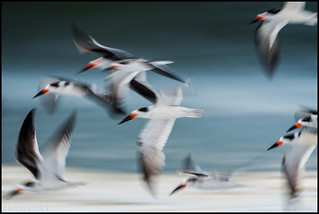
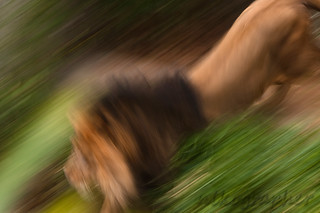
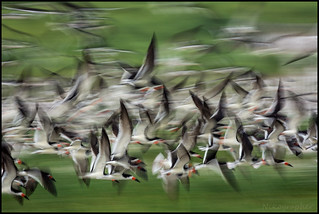
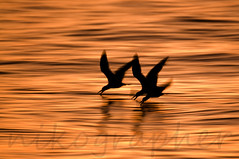
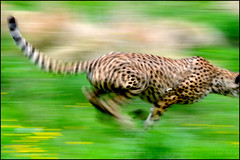

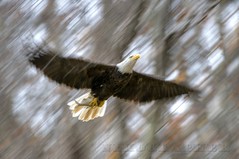
Realizing that the rules for sharp images are not rules to blindly live by has helped me grow. Of the above images all are off a tripod with the intention of making the resulting image except for the last one of the eagle which was a 'happy accident'.
Capturing animals with some motion helps to bring them to life in an image that otherwise might be frozen and lack that feel. Going back to that panda image - seeing some motion can really help bring more to a photo.
Capturing images that work with blur can be pretty difficult though. Things that contribute to a motion blur image not working well are: too much blur, nothing being sharp, having to stop down the lens too much and seeing tons of sensor dust, the blur not going in the right direction due to imperfect panning technique, etc.
So what's the next technique, the next default thought process to get rid of or to question? I have done a short project I called "going vertical" where I shot vertical composition for a while and that helped to break out of the way I was almost always shooting with the camera held in landscape/horizontal mode... I even shot a vertical video...
IDK what's next. Not shooting from eye-level is another approach to take. It is easy to stand and shoot from that position. Or to setup a tripod at eye-level and shoot from there. But shooting from lower, or as low as possible really makes for a better/different perspective.
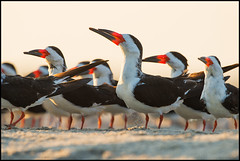
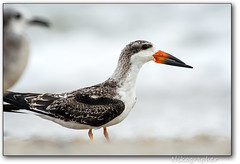
Another norm or standard that I've noticed was worth reconsidering is that of hoping for 'good weather'. I now consider good photography weather usually anything other than clear blue skies or overcast and rainy. As a result I like some overcast, or some clouds, or some rain and storms, or cold weather and things freezing or hot weather and animals that might be reacting to the weather... This summer I specifically went to shoot osprey on 2 of the hottest days in order to see the birds hot. It is harder to shoot on these types of days, be it hot or cold. It takes preparation, and the right approach to pull it off successfully. One of my go to things to help in all kinds of weather or times of year is to keep a case of bottled water in my trunk. Being thirsty or dehydrated is easy to let happen. But it is one of the simplest things to control when shooting and so many things aren't controllable. It's just like always trying to be well fed, and to have ample snacks that are high in protein and good for me. I often will do a day trip on a Saturday and drive 200-500 miles round-trip, where I get up a couple of hours before sunrise and get somewhere good, and then shoot all day and then drive home. And then doing the same or similar the next day, on a weekend when most people might be resting, sleeping in and recovering from a hard week of work - to do it my way takes planning and execution.And being more prepared allows for something to not go my way, and not really be that bad or wreck a day of shooting.
So what's the next thing to mix it up and bring my photography to a new place?
I'm going to start 2017 by going West to a place I've never been, to shoot animals and landscapes I've never seen or shot. I'm trying new things.
With the change in the year, I want to... think like I did at Kenilworth Aquatic Gardens when I went a half dozen times this summer. I went, and went, and got the images I had defaulted to, and then I started to explore more and try for different images and I think I captured my best images of the Lotus Flowers. I've posted a few myself, and shared many more with Tara Brach to use with her talks and meditation posts.

I wonder what it would take to quickly see the default program running, the program that tries to get me to make the same images again, to see the way I have seen before and repeat things. I wonder if there are ways to do less pattern matching and finding less comfort in the old, and seeing new and fresh, quickly or quicker...
I'm going to try new experiences, new locations, new approaches when I can, and I'm going to try to advance my photography and not just make 'sharper images' but make new and different images.
Happy New Year.
-Jon Read more On "EOY Thoughts on Seeing Differently Not Just Shooting Incrementally Better"!





 Posts
Posts


